How to avoid hidden rubbish removal fees in Penge
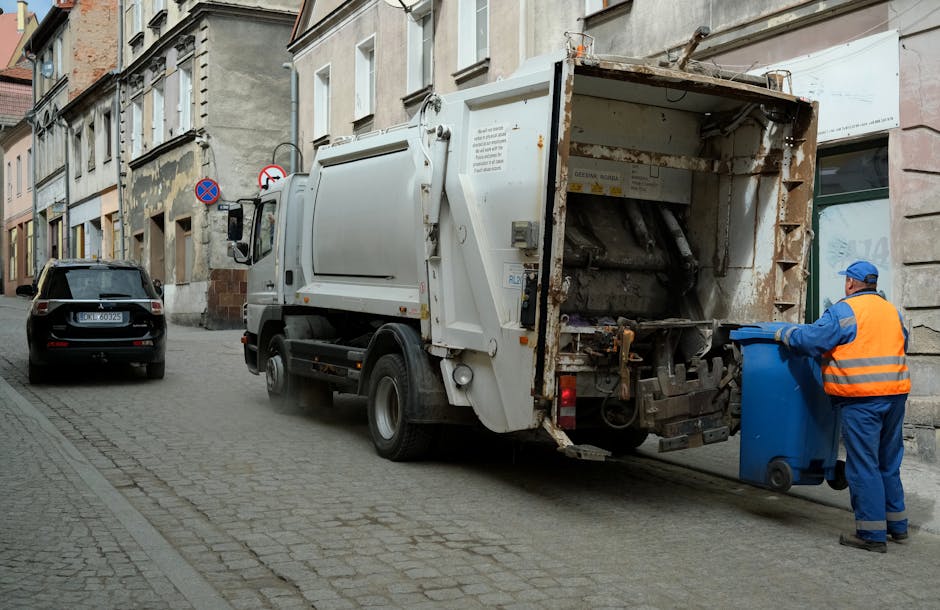
If you have ever booked a clearance job and then felt that little sting when the final bill landed, you are not alone. Hidden rubbish removal fees can creep in through awkward access charges, vague load sizes, waiting time, or "extras" that were never properly explained. In Penge, where homes, flats, garages, and small businesses all come with their own access quirks, it pays to know exactly what you are paying for before the van even pulls up. This guide shows you how to avoid hidden rubbish removal fees in Penge, what to ask, what to check, and how to keep the quote honest from start to finish.
We will look at the common tricks and misunderstandings that lead to surprise costs, plus the practical steps that make pricing clearer. If you are comparing services, it can also help to review a provider's pricing and quotes information and their terms and conditions before you commit. Simple enough, really. But in practice, a lot of people skip that bit and regret it later.
Why avoiding hidden rubbish removal fees matters
Hidden fees are frustrating because they turn a simple job into a guessing game. You may think you have booked a fair price for rubbish removal, only to discover the quote did not include stairs, labour, heavy items, sorting, disposal categories, or extra time on site. That kind of surprise is not just annoying; it can wreck your budget and make it hard to compare companies properly.
In Penge, the issue matters even more because the same job can look very different from one property to the next. A ground-floor flat near the high street is one thing. A top-floor flat with tight stairwells, a long walk to the road, or a side return full of old fencing panels is another. If the price is not clear, the final figure can drift. And let's face it, nobody likes haggling over a skip bag of old junk while a crew is already on the driveway.
Transparency also helps you choose the right service. Some items are better suited to furniture disposal, while larger mixed loads may sit better under broader waste removal. Getting the service match right at the start is one of the easiest ways to avoid add-ons later.
How rubbish removal pricing usually works
Most rubbish removal companies price work using a mix of load size, labour, access, and waste type. That is the short version. The not-so-short version is that the final price can change when the job takes longer, needs more people, involves awkward lifting, or includes items with special disposal requirements.
Here are the main factors that often shape the quote:
- Volume: how much waste there is, usually compared to a van load or part-load.
- Weight: heavy materials such as rubble, soil, or broken tiles can cost more.
- Type of waste: general household rubbish is different from builders' debris or bulky furniture.
- Access: stairs, long walks, narrow doors, parking issues, or rear access.
- Labour: whether the team is doing all the lifting, carrying, and sorting.
- Time on site: delays, waiting, or extra collections can add up.
This is where people get caught out. A quote that sounds lower at first may only cover a basic collection, not the real-world conditions of your property. To get a cleaner comparison, ask whether the price includes loading, disposal, VAT if applicable, and any access-related charges. If you need a service for a specific setting, such as a cluttered loft or a packed flat, it can be worth checking the relevant service page like loft clearance or flat clearance so you understand what type of work is normally involved.
Key benefits of pricing transparency
Clear pricing is not just about avoiding a nasty surprise. It improves the whole job from the first phone call to the final sweep-up.
- Better budgeting: you can plan ahead without keeping a hidden contingency for mystery charges.
- Easier comparisons: you can judge one quote against another on a like-for-like basis.
- Less back-and-forth: fewer disputes, fewer awkward conversations, fewer "oh, by the way" moments.
- Faster booking: when the job is properly scoped, the crew can turn up and get on with it.
- More confidence: you feel better about handing the work over because the terms are understood.
There is also a practical side. If you know exactly what is included, you are more likely to prepare the property properly, which reduces delays. A clear quote often signals a more organised business too. That may sound obvious, but in real life it is a good filter. The messy quote usually leads to a messy invoice. Not always, but enough to pay attention.
Expert summary: The safest way to avoid hidden rubbish removal fees in Penge is to insist on a written, itemised quote, confirm access conditions in advance, and check what happens if the load size changes on the day.
Who this is for and when it makes sense
This advice is for anyone arranging a clearance job in Penge who wants to keep control of the final cost. That includes homeowners, tenants, landlords, local businesses, tradespeople, and anyone dealing with a big pile of unwanted stuff that has quietly grown into a small mountain.
You may need this most when:
- you are clearing a house, flat, loft, garage, or shed
- you have mixed waste and bulky furniture
- you are comparing a few providers and the prices look oddly different
- you are working to a tight budget
- you are booking at short notice and worry about "rush" fees
- you have awkward access, stairs, or parking constraints
It also matters if you are a business arranging commercial clearance. For offices, shops, or light premises, hidden fees can appear through loading delays or after-hours work. In that case, looking at business waste removal or office clearance can help you understand what a more structured service should cover.
Step-by-step guidance
If you want to keep the quote honest, follow a proper process. No drama, just a little discipline up front.
1. List everything that needs removing
Write down the items in plain language. Say "two sofas, one wardrobe, four bin bags, broken shelving, and a mattress" rather than "some stuff from the back room". The more precise you are, the less room there is for pricing games later.
2. Share photos from multiple angles
Good photos reduce guesswork. Include tight corners, staircases, side entrances, garden access, and anything that might slow the crew down. If a sofa has to come down three flights of stairs and through a narrow hall, that matters. A lot.
3. Ask what the quote includes
Before booking, ask whether the price covers loading, labour, disposal, travel, and VAT if relevant. Also ask about extras such as heavy lifting, dismantling, or waiting time. If a company cannot answer clearly, that is a warning sign.
4. Confirm the waste type
Different waste streams can change the price. Garden waste, builders' waste, furniture, and general household rubbish may all be handled differently. If your job includes mixed items, be upfront. A mixed load that includes old timber, plasterboard, or soil can be treated very differently from a simple home clear-out.
5. Check the access conditions
Parking, stairs, distance to the van, entry codes, and lift access all matter. A crew can only quote accurately if they know the reality on site. If you are in a flat above a shop or a narrow terrace with limited parking, say so early.
6. Ask how changes are handled
Sometimes the pile is bigger than expected. Fair enough. Ask in advance what happens if the load increases, if extra items appear, or if part of the job is no longer needed. A good provider will explain whether the quote can be adjusted and how that is confirmed.
7. Get the agreement in writing
This does not need to be a formal legal document the size of a novel. But you should have the key points in writing: scope, expected price, timing, and any assumptions. If something sounds too vague to write down, it is probably too vague to trust.
8. Recheck the final bill before paying
When the crew finishes, compare the invoice with the agreed terms. If there is a difference, ask why. You do not need to be difficult about it. Just calm, clear, and specific. That alone solves a lot of problems.
Expert tips for better results
Over the years, one thing becomes obvious: most hidden fees are not "hidden" in a clever sense. They are usually buried in vague wording, assumptions, or a poor job brief. A few small habits make a big difference.
- Use exact item counts. "Six black bags" is better than "a few bags".
- Describe heavy items clearly. Concrete, bricks, wet soil, and rubble are not the same as old clothes and cardboard.
- Mention access limits early. If a van cannot park close by, say it.
- Ask for the price structure. Is it a fixed quote, a load-based estimate, or a final-on-arrival assessment?
- Keep a record. Save texts, emails, and photos. If there is a disagreement, you will be glad you did.
- Separate reusable items if possible. In some cases, clearing out furniture or appliances in advance can simplify the job. For larger items, see also furniture clearance.
One small but useful habit: take a photo of the load before it leaves. Not because you expect trouble. Just because it gives both sides a shared reference. Very boring, very useful.
Common mistakes to avoid
A lot of fee surprises come from the same few mistakes. If you can avoid these, you are already ahead of the pack.
- Accepting a quote without asking what is excluded. "Excluded" matters as much as "included".
- Giving only a rough description. "A bit of rubbish" is not a proper scope.
- Ignoring access details. Stairs and parking can change the job more than people expect.
- Assuming all waste is priced the same. It usually is not.
- Forgetting about dismantling. Wardrobes, bed frames, and bulky furniture may need to be taken apart.
- Not checking the paperwork. A written agreement protects both sides.
- Choosing the cheapest quote without reading the terms. Cheap can be fine. Cheap and vague is where things get awkward.
Another classic mistake is comparing only the headline figure. Two quotes can look close, but one includes labour and disposal while the other does not. That is not an apples-to-apples comparison, it is more like comparing an apple to the bag it came in.
Tools, resources and recommendations
You do not need fancy software to avoid hidden rubbish removal fees. A simple approach usually works best.
- A phone camera: take clear photos of every room, access point, and pile of waste.
- A notes app or notebook: list every item and any awkward details.
- A ruler or tape measure: useful for oversized furniture, appliances, or awkward openings.
- A basic checklist: keep track of what has been agreed, what has been excluded, and what could change.
- Company information pages: review pages like about us, insurance and safety, and payment and security to see how a provider presents itself.
If sustainability matters to you, it is also sensible to ask how waste is sorted and where recyclable materials go. A provider that openly explains recycling and sustainability is usually doing more than just offering a van and a smile.
Law, compliance, standards, or best practice
When rubbish is removed, there are practical and legal expectations around responsible handling, especially for business waste, construction waste, and anything that could be classified as controlled waste. You do not need to become a compliance expert, but you should expect a professional service to handle waste properly, transport it responsibly, and follow relevant UK rules and industry norms.
From a customer's point of view, best practice means:
- getting a clear description of the waste type
- knowing who is responsible for loading and disposal
- having a written price or written estimate
- confirming whether the provider is insured for the job
- understanding what happens if the scope changes
If the work is more specialist, such as builders' debris from a renovation or fit-out, the expectations should be even clearer. That is one reason people look at builders waste clearance for construction-related jobs rather than assuming a general household collection will cover everything.
For business customers, keep records of the collection, invoice, and terms. For domestic customers, the same principle applies on a smaller scale. Documentation is not glamorous, but it is what keeps misunderstandings small.
Options, methods, or comparison table
If you are trying to avoid hidden fees, the method you choose matters as much as the provider you choose. Here is a simple comparison of common rubbish removal approaches.
| Method | Best for | Typical cost risk | Fee transparency |
|---|---|---|---|
| Fixed quote collection | Known loads, clear access, straightforward jobs | Lower, if the scope is accurate | Usually strong |
| Load-based pricing | Mixed waste or jobs with some flexibility | Medium, if the estimate is vague | Depends on how the load is measured |
| On-site assessment | Awkward access, large clearances, uncertain volumes | Lower if the assessment is honest; higher if rushed | Often good when done carefully |
| Garage or loft-specific clearance | Large storage areas with varied items | Medium, especially if heavy lifting is involved | Good when the scope is itemised |
In practice, fixed quotes tend to be easiest to understand, provided the information you give is accurate. On-site assessments can be useful when the job is messy or difficult to judge from photos alone. And if your clearance is focused on a single space, such as a garage or loft, a more targeted service like garage clearance or house clearance may make the pricing conversation simpler.
Case study or real-world example
Imagine a family in Penge clearing out a first-floor flat after a long tenancy. There is a worn sofa, two wardrobes, a mattress, eight bags of household clutter, and a broken chest of drawers. At first glance, it looks like a simple half-day job. But once the crew arrives, they find the wardrobes will not fit through the hallway unless they are dismantled, and parking on the road is tight. The initial "cheap" quote suddenly looks less cheerful.
Now compare that with a better approach. The family sends photos of every item, explains the stair access, mentions the restricted parking, and asks whether dismantling is included. The company responds with a written quote that explains the labour and disposal costs clearly. The job still costs what it costs, but nobody is surprised. The van turns up, the work gets done, and the invoice matches the quote. Much nicer. Much calmer.
That is really the goal here: not the absolute lowest number, but the lowest number of nasty surprises. A clean process saves time, stress, and the sort of back-and-forth that makes people wish they had just kept the old lamp forever.
Practical checklist
Use this checklist before you confirm any rubbish removal booking in Penge.
- Have I listed every item that needs removing?
- Have I sent clear photos from more than one angle?
- Have I described access, stairs, parking, and any entry issues?
- Have I asked what the quote includes and excludes?
- Have I checked whether heavy items, dismantling, or waiting time cost extra?
- Have I confirmed the waste type and whether it is mixed?
- Have I asked how changes in load size will be handled?
- Do I have the quote or agreement in writing?
- Have I read the terms and conditions carefully?
- Do I understand how payment will be taken and when?
If you can tick all of those off, you are in a much stronger position. If not, pause and clarify. A few extra minutes now can save you a lot later.
Conclusion
Hidden rubbish removal fees are usually avoidable when you slow the process down just enough to get the basics right. Be specific about the waste, honest about access, careful with the wording, and firm about getting a clear written quote. That is the whole game, really.
If you are arranging a clearance in Penge, the safest path is to choose transparency over guesswork. Ask better questions, compare like for like, and use service pages such as home clearance or furniture disposal when they match your situation. A little attention at the start keeps the final bill tidy. And that, to be fair, is what most people want.
Get a free quote today and see how much you can save.
Frequently Asked Questions
What are hidden rubbish removal fees?
They are extra charges that are not clearly explained before the job, such as added labour, access fees, waiting time, heavy lifting, or disposal costs that appear later.
How can I avoid surprise charges on a rubbish collection?
Give a detailed description of the waste, share photos, confirm access conditions, ask what is included, and get the quote in writing before you book.
Is a fixed quote better than an estimate?
Usually yes, if the fixed quote is based on accurate information. A vague estimate can still be useful, but it leaves more room for changes on the day.
Do stairs or parking problems usually cost more?
They can, because they affect the labour and time needed. It is better to mention them up front rather than discovering a charge later.
Why do some rubbish removal prices look much lower at first?
Sometimes the headline price only covers a basic part of the service. Once labour, disposal, access, or extra items are added, the total rises.
Should I ask about VAT before booking?
Yes, especially if the quote seems unusually low. It is sensible to ask whether VAT is included so you can compare quotes properly.
What should be in a written quote?
It should ideally show the scope of work, the expected price, any assumptions, and what could cause the price to change.
Can mixed waste affect the final price?
Yes. Mixed loads often require more sorting and may include heavier or differently handled materials, which can change the cost.
Is it worth checking company policies before booking?
Absolutely. Pages such as payment and security, insurance and safety, and complaints procedure can tell you a lot about how the business works.
What if the team arrives and says the job is bigger than expected?
Ask them to explain why, compare it with the photos and description you provided, and only agree to an adjustment if it is clear and fair. You should never feel rushed into a decision.
Does recycling matter when I am just trying to save money?
It can. A provider that sorts and recycles properly may be more transparent overall, and asking about recycling and sustainability can help you judge how the waste will be handled.
What is the best first step if I want a rubbish removal quote in Penge?
Make a short list of items, take clear photos, note any access issues, and ask for a written quote that explains exactly what is included. That simple start avoids most problems.